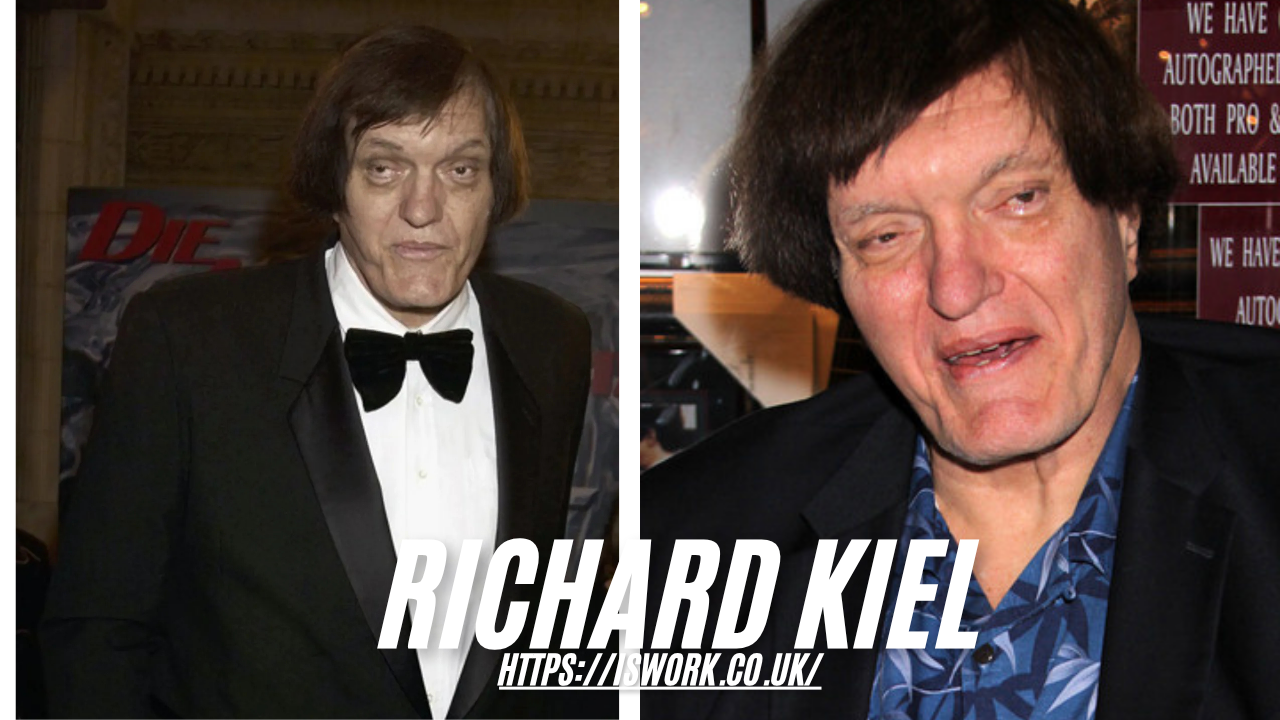
When a massive 7-foot-1.5-inch actor stepped onto the screen with a mouthful of gleaming steel teeth, cinematic history changed forever. Richard Dawson Kiel transformed a terrifying henchman into one of the most beloved characters in the James Bond franchise. His portrayal of Jaws left a permanent mark on pop culture, showing audiences that true acting talent goes far beyond physical stature.
However, the man behind the metal smile lived a life far more complex and inspiring than the villains he typically played. He navigated severe health challenges, worked grueling odd jobs to make ends meet, and eventually became an accomplished author and beloved family man. His journey from a struggling salesman in California to a global movie star is a testament to perseverance.
Quick Bio
| Fact | Detail |
|---|---|
| Full Name | Richard Dawson Kiel |
| Birth Date | September 13, 1939 |
| Death Date | September 10, 2014 |
| Height | 7 feet 1.5 inches (2.17 m) |
| Birthplace | Detroit, Michigan |
| Notable Roles | Jaws (The Spy Who Loved Me, Moonraker), Mr. Larson (Happy Gilmore) |
| Spouse(s) | Faye Daniels (1960–1973), Diane Rogers (1974–2014) |
Early Life and Background
Richard Kiel was born on September 13, 1939, in Detroit, Michigan. His extraordinary height was the result of a hormonal condition called acromegaly. This condition causes the pituitary gland to produce an excess of human growth hormone, leading to unusual physical proportions and heavy facial features. While his size would eventually become his greatest asset in Hollywood, it presented significant physical and social challenges during his early years.
When he was nine years old, his family relocated to the Greater Los Angeles area. Growing up in California placed him close to the entertainment industry, yet a Hollywood career was not his initial goal. Before finding his footing as an actor, Kiel worked a series of unusual and demanding jobs to support himself.
He spent time as a door-to-door vacuum cleaner salesman, using his massive frame and gentle voice to persuade customers. He also worked as a nightclub bouncer, a job well-suited to his intimidating size, and even sold cemetery plots. These early experiences taught him resilience and gave him a strong work ethic that would serve him well in the highly competitive acting world.
Education
While many actors spend years in prestigious theater schools, Richard Kiel took a very different path. He attended Baldwin Park High School in Los Angeles County, navigating the typical teenage experience while towering over his classmates.
After high school, he did not immediately pursue the arts. Instead, he leaned into academics and practical skills. From 1963 to 1965, he worked as a night school mathematics instructor at the William B. Ogden Radio Operational School in Burbank, California. His students often marveled at the sight of a 7-foot giant patiently explaining complex mathematical concepts. This period of his life highlighted his sharp intellect and his desire to help others learn, traits that he carried with him long after he traded the classroom for the movie set.
Career Highlights and Achievements
Richard Kiel broke into the entertainment industry in the late 1950s and early 1960s, mostly taking on minor television roles. He appeared in popular shows like Laramie, The Rifleman, and I Dream of Jeannie. One of his most notable early television appearances was in the classic 1962 The Twilight Zone episode “To Serve Man,” where he played the towering Kanamit alien.
Due to his massive build, producers repeatedly cast him as monsters, thugs, and villains. He played the menacing henchman Voltaire in The Wild Wild West and took on various intimidating roles in shows like The Man from U.N.C.L.E. and Gilligan’s Island.
In 1977, Richard Kiel actually auditioned for the title role in The Incredible Hulk television series. He won the part and even filmed two episodes. Ultimately, producers decided they wanted an actor with a more muscular, bodybuilder physique rather than just extreme height. They replaced him with Lou Ferrigno. Richard Kiel later admitted he was relieved, as he strongly disliked the heavy green makeup and uncomfortable contact lenses required for the character.
Movies
While television paid the bills, the big screen made Richard Kiel a global star. His breakthrough into iconic cinema status happened in 1977 with the James Bond film The Spy Who Loved Me. Cast as the steel-toothed assassin Jaws, Kiel brought a unique blend of terror and physical comedy to the role.
The character was supposed to die at the end of the movie. However, test audiences loved Kiel’s performance so much that the producers changed the ending, allowing Jaws to survive. This decision led to his return in the 1979 Bond film Moonraker. In this sequel, the writers leaned into Kiel’s natural comedic timing. They even gave Jaws a romantic storyline with a petite woman named Dolly, transforming the fearsome assassin into a fan-favorite antihero.
Interestingly, the metal teeth that defined his character were excruciating to wear. Richard Kiel could only keep the heavy prosthetics in his mouth for a few minutes at a time before experiencing severe pain. Despite the discomfort, he delivered a legendary performance.
Beyond James Bond, Kiel enjoyed a rich film career. He played the good-guy-turned-bad in Force 10 from Navarone (1978) and starred alongside Clint Eastwood in the 1985 western Pale Rider. A younger generation of fans came to know him in 1996 when he played Mr. Larson, the towering former boss of Adam Sandler’s character in the hit comedy Happy Gilmore. His final film role was a voice acting part in the 2010 Disney animated feature Tangled, where he voiced Vladimir, a massive thug with a surprisingly soft heart.
Personal Life and Relationships
Behind the scenes, Richard Kiel was known as a gentle, soft-spoken man who valued his family above all else. He was married twice in his life. His first marriage to Faye Daniels lasted from 1960 to 1973.
In 1974, he married Diane Rogers, and the two shared a remarkable 40-year marriage until his death in 2014. The couple had four children and eventually welcomed nine grandchildren into their family. Diane stood just 5 feet 1 inch tall, creating a striking two-foot height difference between the spouses. When people asked about the height gap, Diane famously remarked that they “saw eye to eye on so many things.”
Richard Kiel faced significant personal struggles during his early acting years, particularly with alcoholism. He eventually found sobriety, a victory he openly attributed to becoming a born-again Christian. His religious conversion brought him immense peace and gave him the strength to maintain a healthy, balanced life away from the Hollywood party scene.
He also harbored a deep passion for history. Kiel spent 25 years researching the life of Cassius Marcellus Clay, a wealthy 19th-century abolitionist. In 2007, he co-authored the book Kentucky Lion: The True Story of Cassius Clay with Pamela Wallace. He donated half of his royalties from the book to a scholarship fund for financially disadvantaged students.
Net Worth
At the time of his passing in 2014, financial outlets estimated Richard Kiel’s net worth to be between $500,000 and $1 million. While he never commanded the massive multimillion-dollar paychecks of A-list leading men, he built a highly successful and sustainable career.
His wealth came from decades of consistent television and film acting, voice-over work for video games, and book royalties. Furthermore, Kiel was a popular fixture at fan conventions around the world. He regularly attended autograph signings and James Bond fan events, which provided a steady income stream and allowed him to connect directly with the people who adored his work.
Impact and Legacy
Richard Kiel completely changed the way Hollywood views the “heavy” or the henchman. Before Jaws, movie villains were often one-dimensional obstacles for the hero to overcome. Kiel infused his characters with frustration, determination, and humanity. He showed that a towering monster could also be an underdog, earning the audience’s sympathy and laughter.
His legacy extends far beyond his filmography. He authored an autobiography in 2002 titled Making It Big In Movies, inspiring other actors who felt they did not fit the traditional Hollywood mold. He also gave his time and money to charity, using his platform to promote education and historical awareness.
Kiel passed away on September 10, 2014, in Fresno, California, just three days shy of his 75th birthday. The cause of death was related to heart disease. Following his passing, co-stars and fans worldwide paid tribute to the man who proved that true giants are measured by their kindness, not just their height.
Conclusion
Richard Kiel’s life reminds us that the most memorable characters are often played by individuals who have overcome significant obstacles. From surviving the grueling demands of early television to redefining the action movie villain, his journey is a masterclass in dedication.
If you want to experience his incredible presence firsthand, queue up a double feature of The Spy Who Loved Me and Moonraker. For a deeper look at his personal journey, pick up a copy of his autobiography, Making It Big In Movies. Exploring his work guarantees a renewed appreciation for one of cinema’s most gentle giants.
Frequently Asked Questions
Why was Richard Kiel so tall?
Richard Kiel had acromegaly, a hormonal disorder that results from the pituitary gland producing too much growth hormone. This condition caused his extreme height of 7 feet 1.5 inches and his distinctive facial features.
Did Richard Kiel really wear metal teeth in the James Bond movies?
Yes, he wore a custom-made metal prosthetic over his real teeth for the role of Jaws. The mouthpiece was extremely uncomfortable, and he could only tolerate wearing it for short bursts during filming.
Was Richard Kiel in The Incredible Hulk?
He was initially cast as the Hulk in the 1977 television series and filmed a few scenes. However, producers decided they wanted an actor with a bodybuilder physique rather than extreme height, so they replaced him with Lou Ferrigno.
What was Richard Kiel’s last movie?
His final film role was in the 2010 Disney animated movie Tangled. He provided the voice for Vladimir, the large, helmet-wearing thug who collects ceramic unicorns.